An expedition to the Ustyurt Plateau, a film studying a million-year-old relationship
Author: Saxon Bosworth
An English version of the article posted with National Geographic Kazakhstan, “ТЫМ БАЯУҒА – ТЫМ ҚЫСҚА УАҚЫТ“. A Russian version is also available, Смелая жизнь дикой среднеазиатской черепахи.
Learn more about the project: tasbaqa.org
As the tarmac road east from Zhanaozen transitions to sand, we bump and bounce on the trail for hours. We are loaded with sufficient food, water, and fuel to last us 2 weeks in the Ustyurt Nature Reserve. I make myself comfortable next to our larder, using my body weight to hold down dozens of kilos of dried fruit, carrots, potatoes, and 20 dried, broken-up tandoor nan (bread). The last settlements pass out of view, and each of the team check their mobile phones for one last time. From now on, a satellite phone, reserved for emergencies, is our only means of communication with the outside world.
We are enroute to the southern ranger camp of the Ustyurt Nature Reserve and still a few hours drive away from the camp. Then, in a flash, I am broken from a dazed daydream, surprised shouts erupt from our 4×4, “TASBAQA!”.
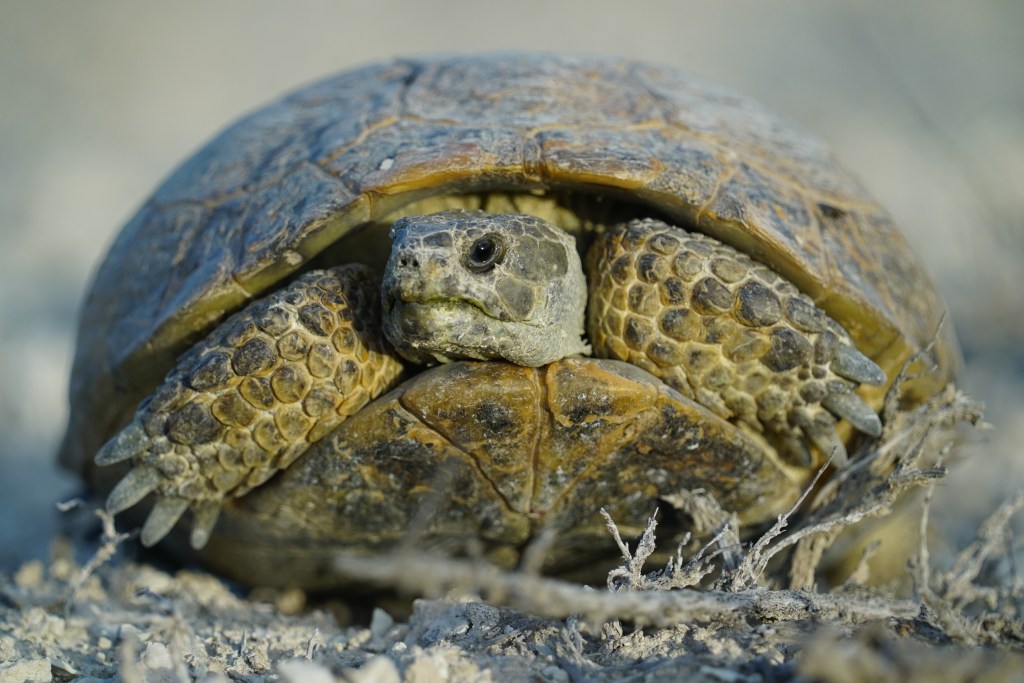
In Kazakh, “TASBAQA” meaning “stone frog”, is the name for the tortoise. A harsh winter is drawing to its end, and after a 10-month-long sleep, it is time for the Central Asian Tortoise of the Ustyurt Plateau to arise. There is much to do and no time to waste.
“On the desert plains of the Ustyurt Plateau, where the wind carves waves in the sand and the sun scorches the earth, lives one of the most resilient animals of Central Asia — the Central Asian tortoise (Testudo horsfieldii). Often overlooked, this creature rarely sparks public admiration. Yet it is a guardian of balance in desert ecosystems — an ancient inhabitant of these lands, worthy of respect and protection”, says Yuliya Zaugg, Director of the Tasbaqa Fund.
“The new film by Saxon, “TASBAQA”, reveals the tortoise in its true majesty — in the natural environment where it was born to survive. We see its slow but determined path across the sands – its journey is one of endurance, of unyielding presence in a harsh world. But today, its path is increasingly obstructed by threats.”
Select scenes from “TASBAQA” teaser trailer.

THE USTYURT PLATEAU
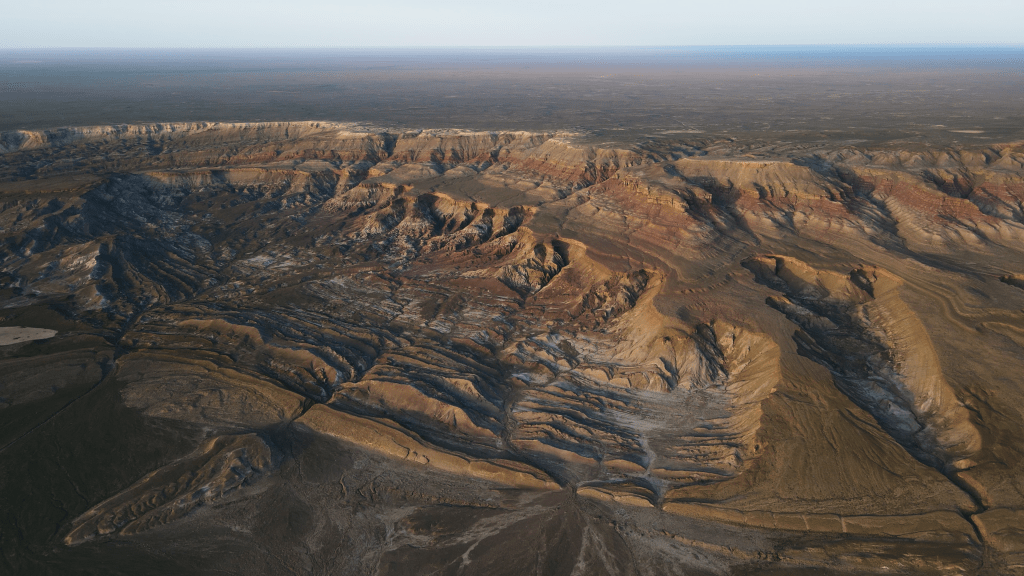
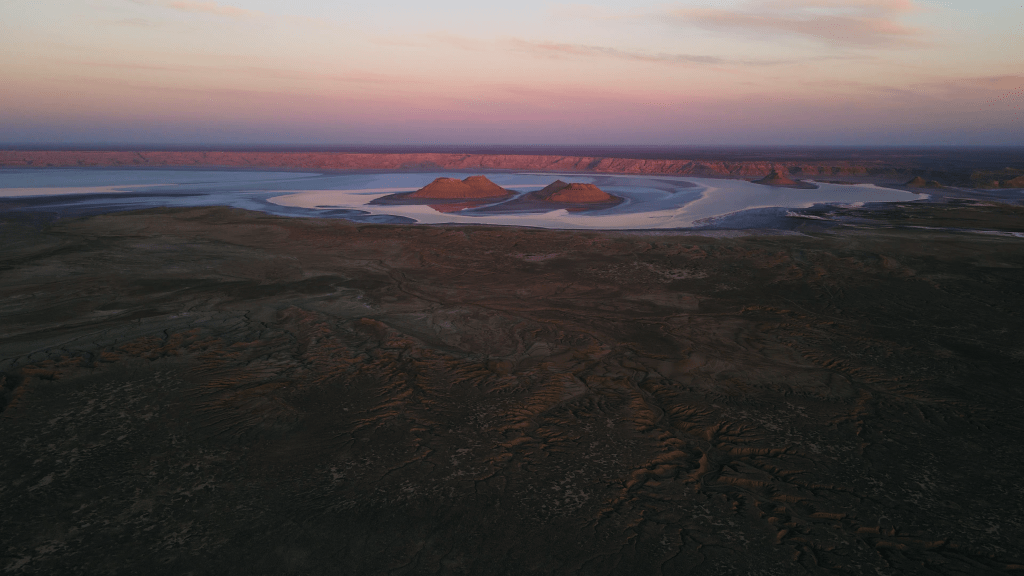
The mighty Ustyurt Plateau spans more than 200,000 km² across Kazakhstan, Uzbekistan and Turkmenistan. There are no permanent fresh water rivers or lakes, winter temperatures stoop to -40°C and summers soar beyond 50°C+. High temperature and low air humidity paired with low precipitation and high evaporation rate make for extreme aridity of the region’s climate. Despite these extreme conditions, an ecosystem not only persists but thrives. The Ustyurt Plateau is assessed to be inhabited by not less than 15 reptile species, 33 mammal species, and 174 bird species.
The Ustyurt Plateau is an area of temperate desert, a type of ecosystem defined by its low rainfall and highly contrasting temperatures of winter and summer. 95% of the world’s temperate deserts are located in Central Asia, and according to the IUCN, they are one of the least recognised biomes worldwide. These temperate – otherwise known as ‘cold winter’ – deserts, are unique areas with significant importance for migrating birds and great wild herds of ungulates, such as the saiga antelope. In 2023, Central Asian temperate deserts were recognised as a UNESCO World Heritage Site for their “exceptionally diverse flora and fauna that have adapted to the harsh conditions”.
The Ustyurt Nature Reserve, 2,233 km², is located in the Mangystau Region, in southwest Kazakhstan, and was established in 1984. The reserve itself plays host to rare and endangered species: urial, goitered gazelle, caracal, golden eagle, Egyptian vulture, as well as – thanks to recent remote camera trapping conservation projects – at least one Persian leopard. The film, “TASBAQA”, was shot entirely within the reserve.
“The Ustyurt State Nature Reserve is the only reserve in Western Kazakhstan, is a regional research institution, the main goal of which is to preserve in their natural state unique natural complexes, historical monuments, flora and fauna of desert zones. The unique features of the fauna and flora of the desert zone of the reserve, due to the inaccessibility, waterless habitats and harsh climatic conditions, are undoubtedly of great interest, and open up great prospects for future scientific research”, says Ermek Zhaskairat Ermekuly, researcher of the RSU ‘Ustyurt State Nature Reserve’.
The extreme climatic conditions mean there is a short window for ephemeral vegetation to bloom, signalling a wake-up call to the tortoises after a long sleep. The preparations of our expedition had been entirely built around this event, which occurs from mid-March each year. We were here to see an emergence.
THE CENTRAL ASIAN TORTOISE
The Central Asian Tortoise (Testudo horsfieldii) is a species whose existence has become deeply entwined with the seasons of its home. The lifecycle of the Central Asian Tortoise has long been of interest to researchers due to its high adaptability to harsh climatic conditions and an extremely short seasonal activity, with academic references on the topic dating back to 1844.
Our local colleagues informed us that, in Mangystau, there are various expressions and legends that connect them with the Central Asian tortoise. For example, some say, “those that are lucky, must have met with a tortoise with a blade of grass in its mouth” – the grass which had helped the tortoise to sleep so long and sweetly. This cultural connection between Manystau and their reptilian neighbour we touch upon in the film, “TASBAQA”.
The wide range of the Central Asian tortoise spans from western China to the Caspian Sea, found in Kazakhstan Turkmenistan, Uzbekistan, Kyrgyzstan, Tajikistan, Iran, Afghanistan, Pakistan and a small area in western China, Xinjiang. The formation of this range is thought to have occurred during the Pleistocene epoch, more than one million years ago. After settling in the plains of Turan, the tortoise gradually moved north as glaciers shrank and the environment became more arid.
The hibernation is spent in underground burrows, which protect the tortoise from predators as well as hypothermia. After emerging, the tortoise of Ustyurt has two key priorities: feeding and mating. The mating window is very short, and by the beginning of April, this chapter of the cycle has concluded, and so our arrival date had to be precise.
Their emergence can be delayed by cool weather or made premature by warm weather, and even with favourable weather, they do not appear every day. There were a few hot days in early March and then a cooler spell days in the middle of the month, just prior to our arrival. This sowed some seeds of doubt as to when they would emerge this year, and whether our efforts would be partnered by some luck. Thankfully, they were.
When identifying and selecting food, the tortoise uses sight and smell, distinguishing colours well, and recognising food several meters away, before going purposely to feed. There are around 180 plant species in their diet, including plants that contain toxins, and can be poisonous for some herbivorous ungulates. Other food, such as invertebrates, small bones, and bird pellets make up a small percentage, approximately 2%, of their diet.
The tortoise grows very slowly, only reaching sexual maturity at between 10 and 13 years of age. Of course, not all eggs will live to reach this age, many eggs and young tortoises are eaten by predators – some predators will too pose a threat to mature adults. There are 35 known predators of the Central Asian tortoise, with the most common being the desert monitor and golden eagle, whilst foxes, honey badgers, and desert raven often look to the tortoise as prey. However, academic studies have long attributed anthropomorphic factors as the main reason for the Central Asian tortoise’s population decline.
Be notified about “TASBAQA” screenings and online streaming:


A STORY FROM EXPEDITION “TASBAQA”
Of the 12 days we spent in the Ustyurt Nature Reserve, I spent 4 days observing the life of one individual, whose home consumed my imagination. The first camp of the expedition was the ranger station “Honoré”, located on the south side of the reserve, in a flatter, sandier zone. Here, we observed a number of individuals, including several couples engaging in mating behaviour.
On our 4th day we decided to move on to the “Kenderli” ranger station. This camp is located amongst the chink. On our first evening, we ventured out before darkness fell to investigate. Walking into the chink, we had cliff edge to our right and a sandy lowland on our left. The calming calls of the crested lark are broken as my colleague, Vlad Terentyev, shouts to me from ahead, “SAXON, TASBAQA!”.
To our surprise this tortoise was not to our left, amongst the vegetation of the lowland, but instead ascending up the cliffy ledge to our right. I delicately tracked it higher and higher, and after some time, I realised, it must be heading home for the night.
Spotting a large rock on its side that looks to have fallen from the clifftop long ago, the dots start to link in my brain. Perhaps this great stone is the home of this tortoise? I sling the tripod over my shoulder and create a path to the rock, avoiding the tortoise. Upon arrival, it is clear something is actively using a hole under the rock as a home. I set up my camera; time passes, I sit on the rocks in silence – how I spent most of the expedition. As I start to doubt my assumption, the tortoise emerges behind a small section of the cliffside and directly – but of course in its own time – enters the shelter, its home.
I would spend 4 days filming the life of this individual, who would become the centrepiece of the film.
Our goal was to highlight the symbiotic relationship between species and ecosystem. For me, this tortoise, living high up on the beginnings of the chink, is a powerful representative for the wild tortoise living freely in the centre of this vast and mighty plateau. A beautifully bold life, adapted to the most extreme of ecosystems, an example of the long-standing and intricate connections of our natural world. This film showcases the elemental web that underpins our existence: ecosystems, flora and fauna, water, and climate.


Why is the Central Asian Tortoise classified as Vulnerable? What are their main threats?
Interview with Yuliya Zaugg – Director of Tasbaqa
“The notorious human impact. Agricultural development and as a result – expansion of sown areas and pastures, road and pipeline construction, expanding towns and villages are rapidly destroying and fragmenting the habitats. Deep trenches illegally excavated around agricultural fields to protect them from livestock grazing have become deadly traps for thousands of animals every year — tortoises making up the majority. Once they fall in, they cannot climb out, and perish from heat, thirst, and exhaustion. Also, it is not uncommon for tortoises to perish under the wheels of cars while attempting to cross the road.
Another serious problem is illegal collection for trade. In Kazakhstan for several decades — from the 1920s until 2001, when capture was finally banned — the tortoise was officially a harvested species. According to preserved data, from 1976 to 1993, the state agency Okhotzooprom collected on average over 108,000 tortoises annually. And these are just the official numbers, excluding poaching by locals and people from neighboring countries.
Tortoises were captured for the domestic market and on request from foreign firms — to feed fur-bearing animals on farms, for culinary purposes, for zoos, scientific research and for sales as pets. Despite protests from herpetologists, who stated that this species was unsuitable as a pet, tortoises were aggressively promoted as low-maintenance animals and sold in large numbers through pet stores. Anticipating demand, they were often kept and died in overcrowded enclosures without food and unable to move for months.
As a result of this uncontrolled harvesting, the age and sex structure of many populations was disrupted, numbers in key habitats declined dramatically — and have not recovered. For example, in the early 20th century, surveys on the right bank of the Ili River recorded up to 41 tortoises per hectare (t/ha). By the 1970s, the maximum figures were already down to 11–15 t/ha. In 2025, the Tasbaqa Fund conducted surveys, including the same localities. The data is still being processed, but it is already clear that the numbers are now much lower than 11 t/ha.
Although the species is listed as Vulnerable (VU) on the IUCN Red List and included in Appendix II of CITES, illegal capture continues. Tortoises are removed from nature by people who don’t realize that their disappearance represents the collapse of a critical ecological foundation.
In the wild, the tortoise can live up to 50 years. Adapted to an extreme climate, it can spend ten months a year in hibernation, enduring heat, cold, drought and food shortages. But this slow and patient life is precisely what makes it vulnerable: it reaches sexual maturity late and reproduces slowly. Any loss is a blow that echoes for decades.
The Tasbaqa Fund is working to create conditions for the recovery and sustainable preservation of the Central Asian tortoise. We say to the world: “Look at her.” This tortoise is not just an animal. She is the voice of those who are not heard. And if we don’t learn to see even those who are silent, then one day, even those who scream will fall silent too.”
Exclusive stills from film, “TASBAQA”, for National Geographic Kazakhstan.


An English version of the article posted with National Geographic Kazakhstan, “ТЫМ БАЯУҒА – ТЫМ ҚЫСҚА УАҚЫТ“. A Russian version is also available, Смелая жизнь дикой среднеазиатской черепахи.
Learn more about the project: tasbaqa.org
 Découvrir La Vie